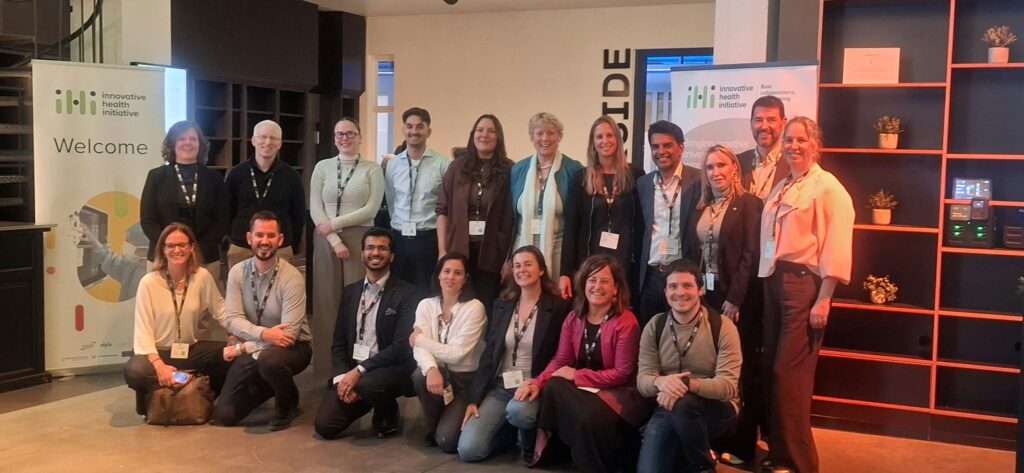
Several COMPASS partners participated in the IHI Forum 2026 in Brussels, presenting their research, exchanging knowledge and strengthening connections with the European health innovation community.
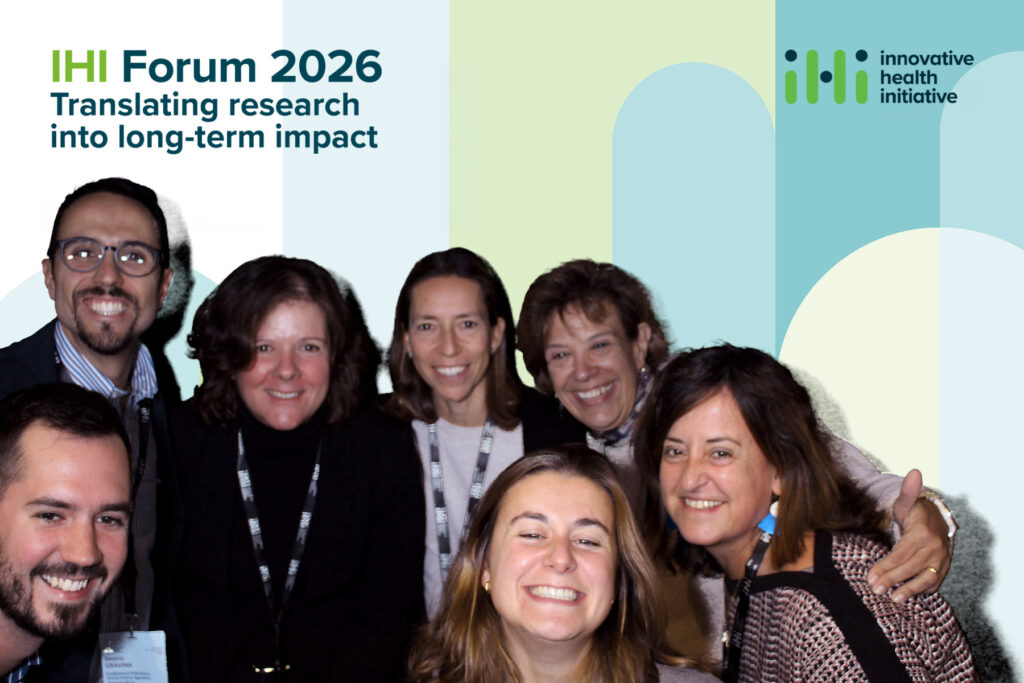
On 20–21 October, the Innovative Health Initiative (IHI) brought together researchers, industry representatives, healthcare professionals, patient organisations and other stakeholders for the IHI Forum 2026, under the theme “Translating research into long-term impact”.
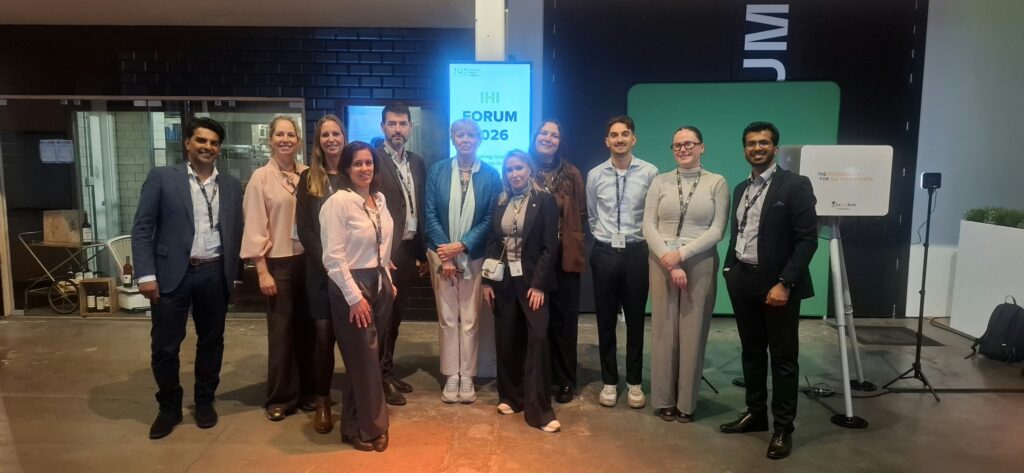
The COMPASS consortium was well represented at the Forum, with participants from GE HealthCare, Fondazione Policlinico Universitario Agostino Gemelli IRCCS, Global Heart Hub, Zabala Innovation, Fraunhofer, IESE Business School and Munich Imaging. Throughout the event, partners contributed to scientific exchanges, showcased their research and connected with other organisations working to address Europe’s healthcare challenge.Their participation reflected the importance of public-private collaboration in bridging the gap between scientific discoveries and their implementation in healthcare.
A space to showcase COMPASS research and innovation
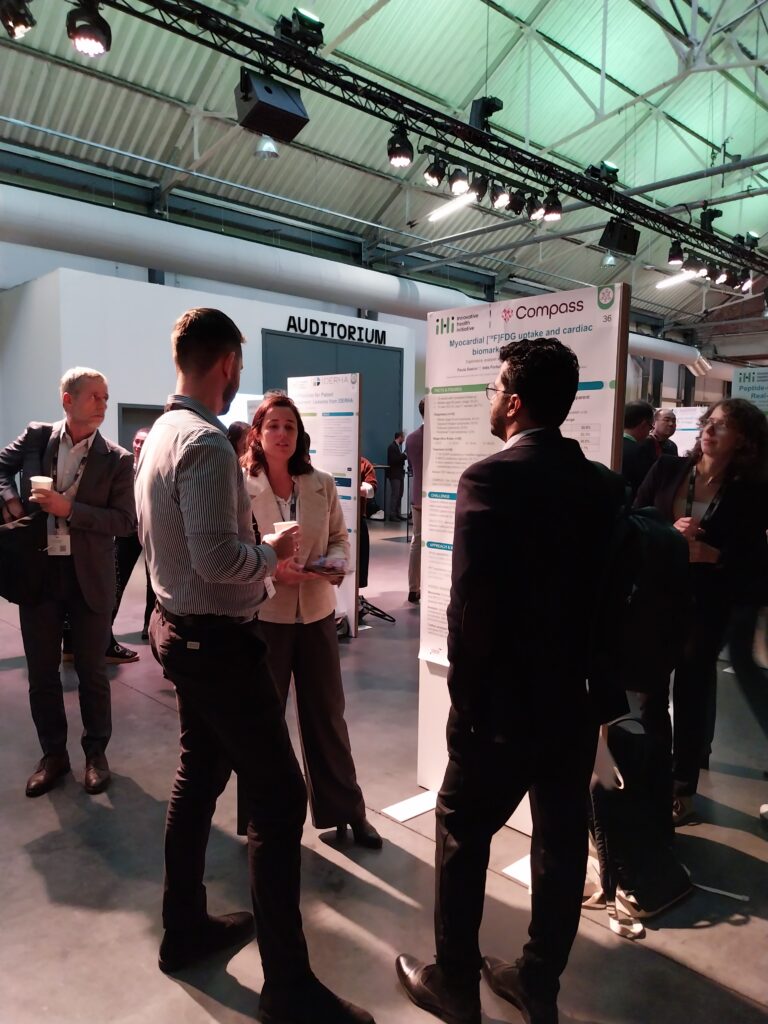
One of the highlights of the Forum was the dedicated poster session, which brought together more than 60 early-career researchers to present their work and exchange ideas with the wider scientific community.
Among the participants, Suhanyaa Nitkunanantharajah, representing Munich Imaging, presented research entitled “Catching Cardiotoxicity Early: Monitoring Cardiovascular Health with Wearables – AI-enabled Optoacoustic Sensing of Microvascular Morphology”.
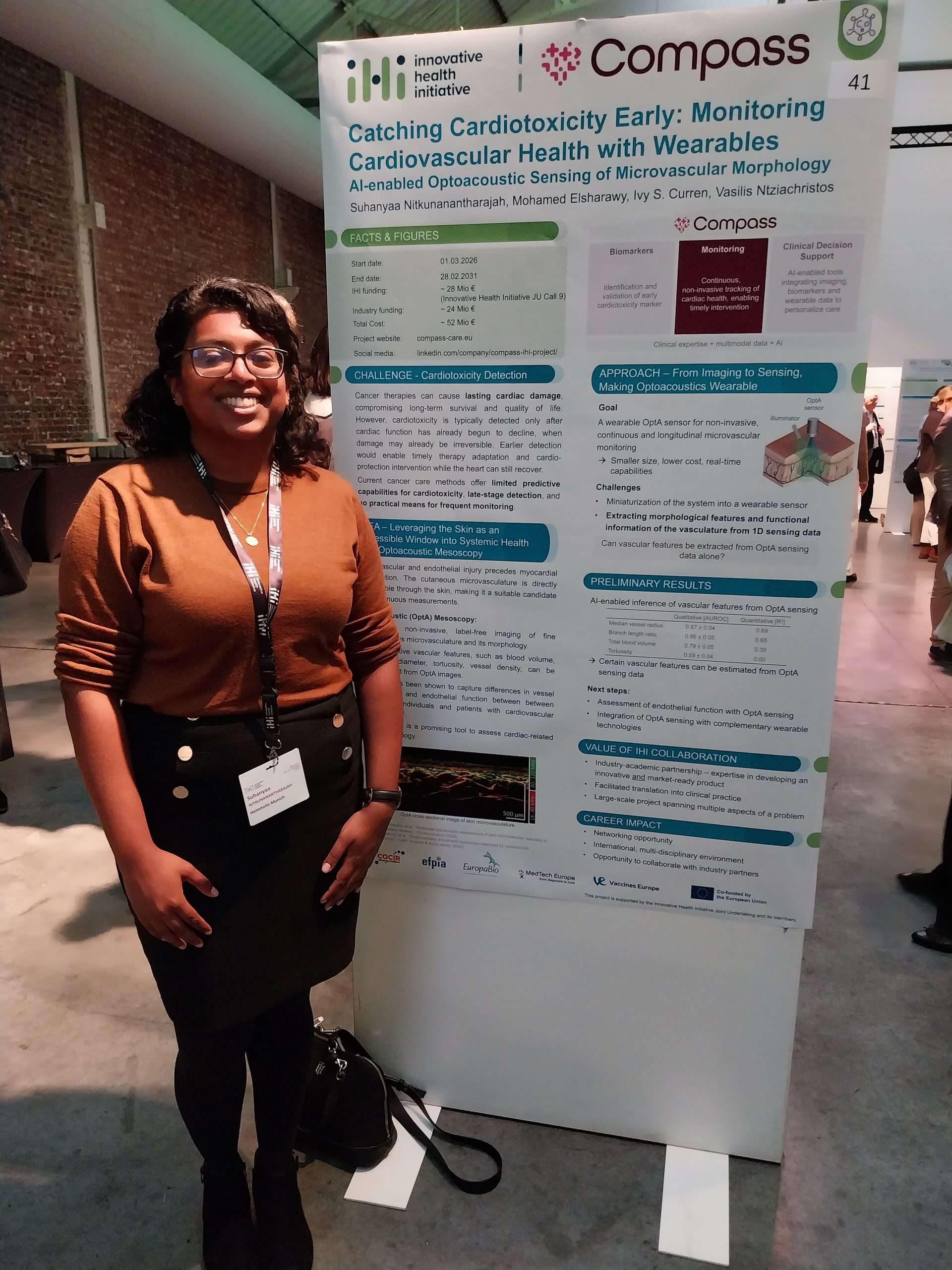
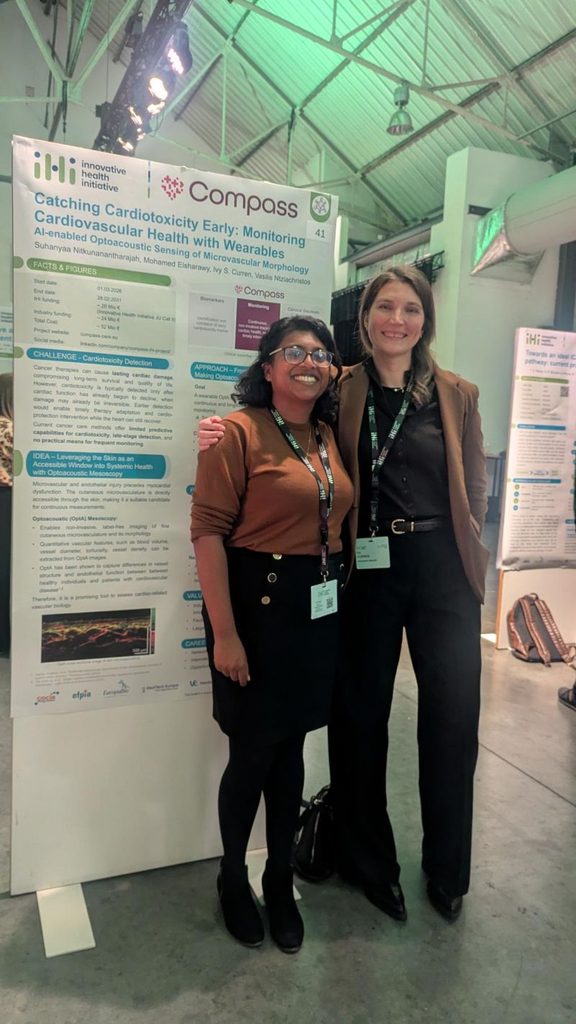
The work explores how photonics, artificial intelligence and wearable sensing technologies could contribute to the earlier detection of cardiovascular changes, supporting the development of more preventive and personalised approaches to healthcare.
Inês Fortuna, from the Faculty of Medicine of the University of Porto, also presented research entitled “Myocardial [¹⁸F]FDG uptake and cardiac biomarkers in lymphoma”, highlighting another area of investigation within the COMPASS consortium.
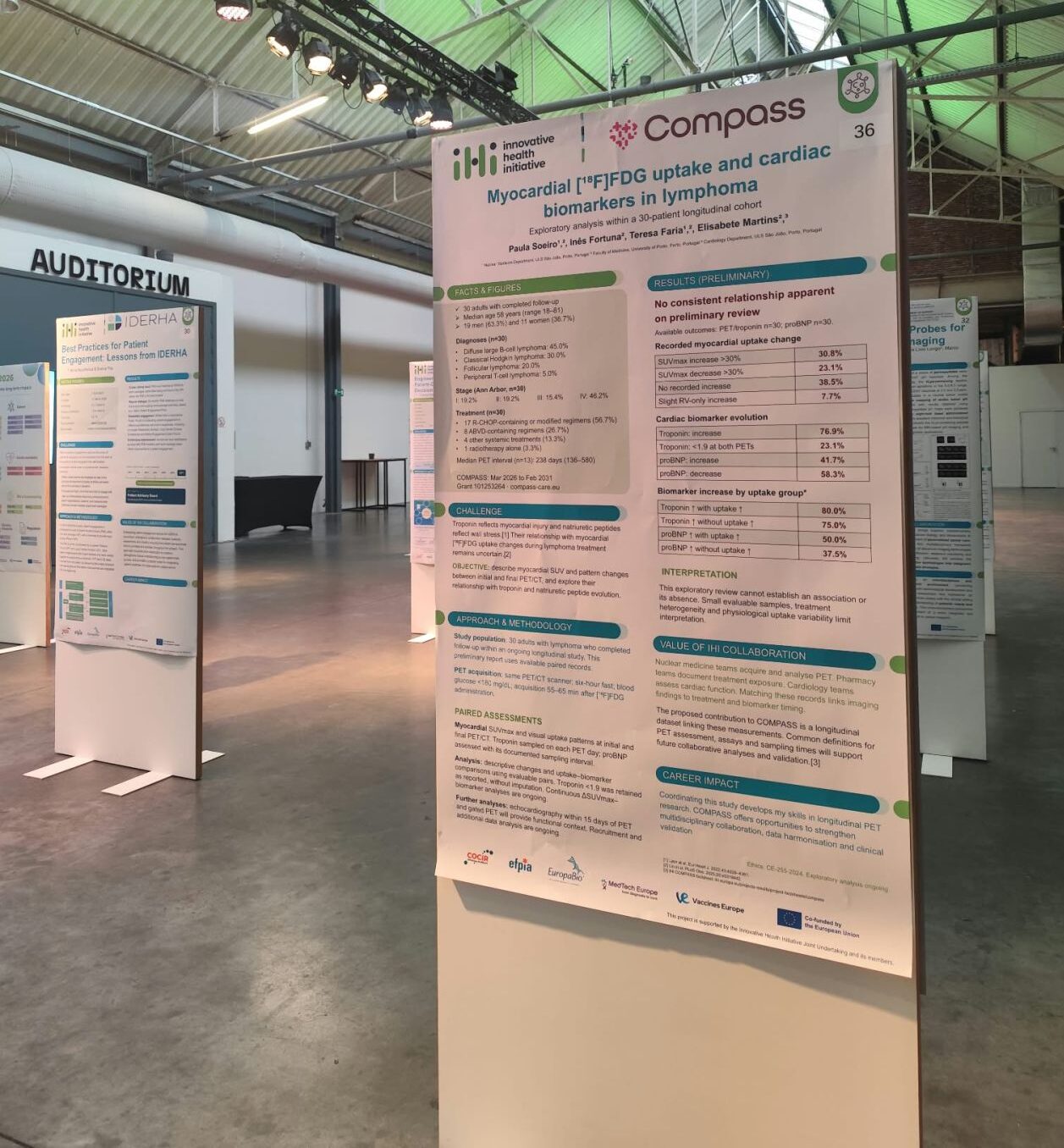
Reflecting on her experience at the Forum, she emphasised the value of sharing research and connecting with the international scientific community:
“It was an incredible opportunity to participate in insightful workshops and engage with inspiring scientific sessions alongside international peers.”
Together, these research contributions highlight the diversity of scientific expertise within COMPASS and its shared ambition to improve the prediction, early detection and management of cardiovascular complications in cancer patients and survivors.
Beyond innovation: the challenge of implementation
Beyond the scientific presentations, a central message emerged from the Forum: developing innovative healthcare solutions is only part of the challenge. Ensuring that these advances reach clinical practice and benefit patients is equally important.
As Laura Sesma from Zabala Innovation highlighted in her reflections on the event:
“Europe does not have an innovation problem, but an implementation challenge.”
This message closely reflects the ambition of COMPASS. Built on public-private collaboration, the project brings together clinical, academic, industrial and patient perspectives to advance cardio-oncology research and support the development of integrated, patient-centred care pathways that can be adopted across different healthcare settings.
The Forum also provided valuable opportunities for partners to strengthen existing relationships and exchange ideas with the wider European health innovation community. These interactions reinforce the importance of multidisciplinary collaboration in addressing complex healthcare challenges and ensuring that research responds to real-world needs.
As COMPASS progresses, this collaborative approach will remain essential to its mission: translating scientific knowledge and technological innovation into more accessible, personalised and sustainable cardio-oncology care.
In essence, public-private collaboration is not simply about pooling resources. It is about connecting the different capabilities needed along the innovation pathway. For COMPASS, this shared effort ultimately has one overarching purpose: to improve outcomes for both cancer and cardiovascular health.