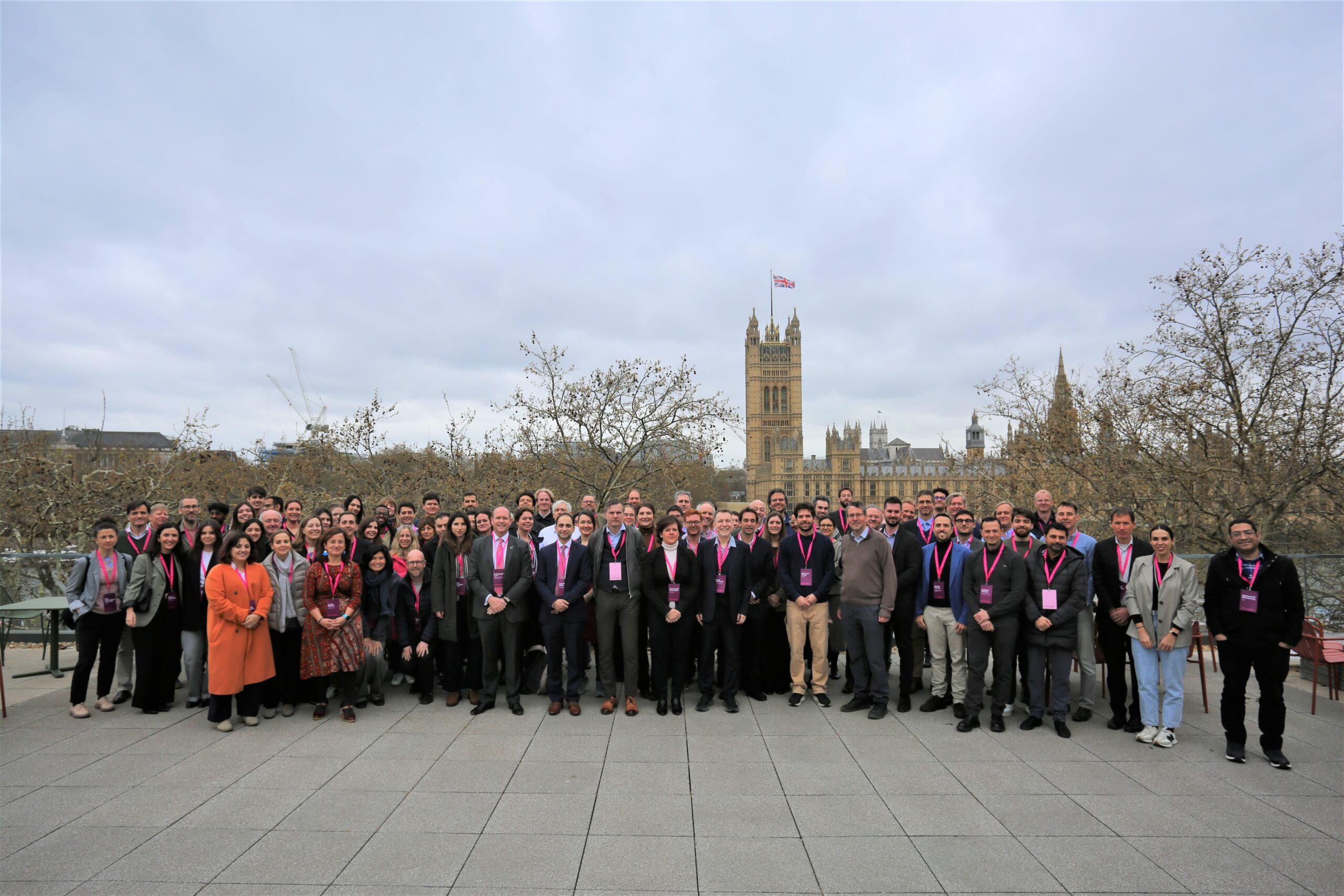
The COMPASS project kick-off meeting, hosted by King’s College London, brought together partners from across Europe and beyond to initiate a coordinated effort to advance patient-centred cardio-oncology care.
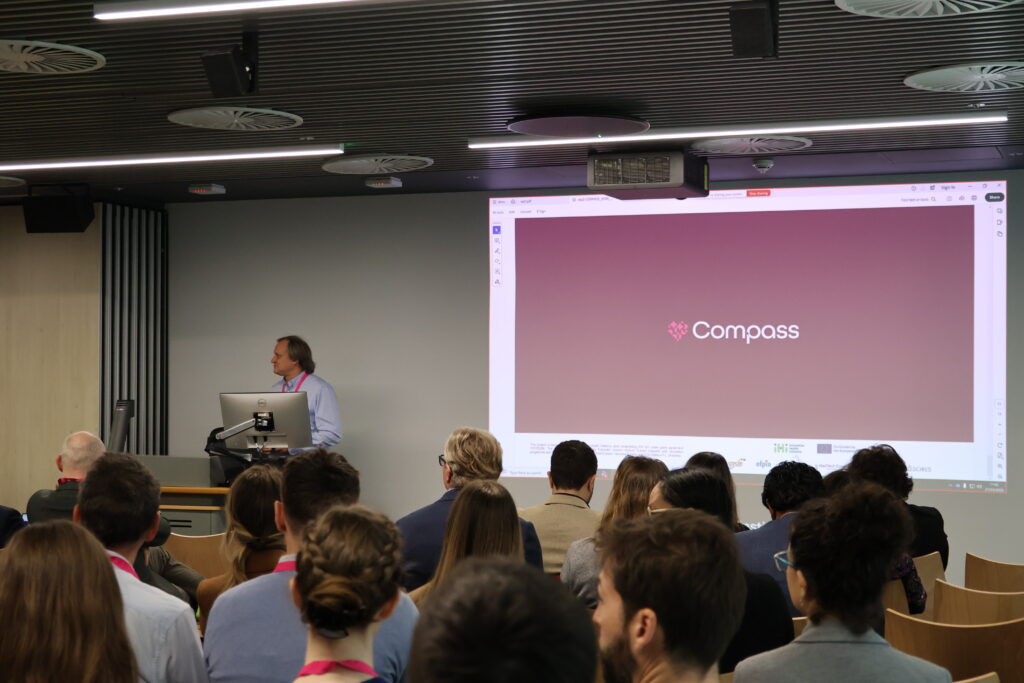
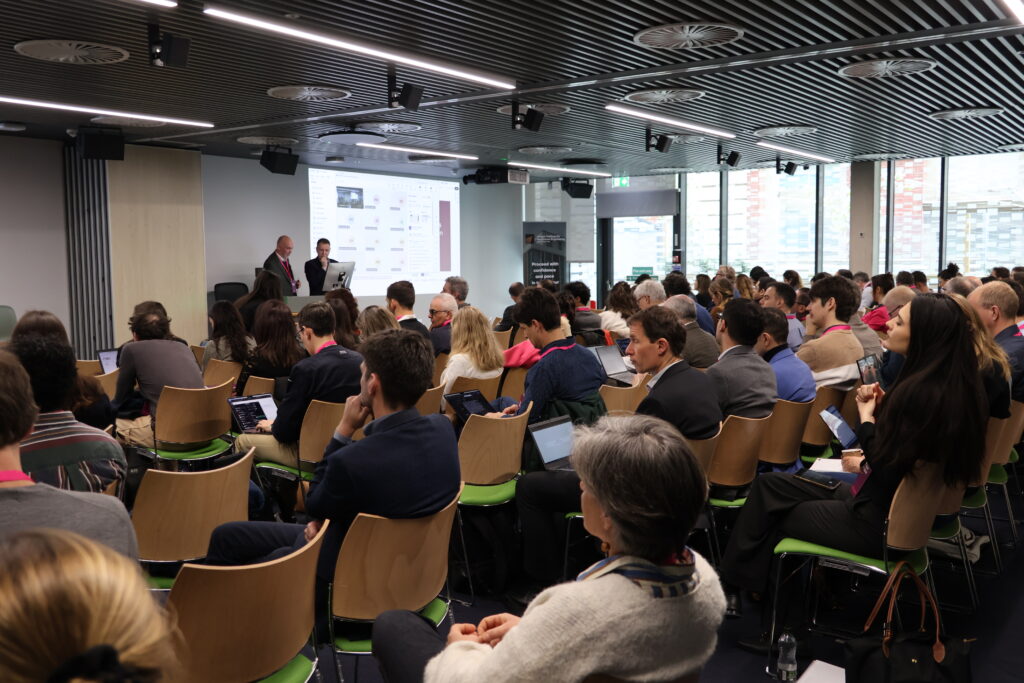
On 26–27 March 2026, the COMPASS project officially kicked off in London, bringing together over 100 participants onsite, with many more joining remotely. Hosted by King’s College London, the meeting marked the beginning of a five-year journey to reshape how cardiovascular health is managed in cancer patients and survivors.
As cancer survival rates continue to improve, a new challenge is becoming increasingly evident: cardiovascular disease is emerging as a major long-term risk. Addressing this complex intersection between oncology and cardiology requires coordinated, multidisciplinary action, something COMPASS is uniquely positioned to deliver.
Through a comprehensive and patient-centred approach, COMPASS aims to improve the early prediction of cardiotoxicity risk, enable earlier detection of cardiovascular complications, and support more personalised treatment and long-term monitoring. By bringing together expertise from clinical practice, biomedical research, medical imaging, artificial intelligence, and public health, the project seeks to address current gaps in cardio-oncology care and contribute to more integrated and effective healthcare systems.
Laying the groundwork for innovation
The first day of the meeting opened with a warm welcome from Steve Archibald (King’s College London), representing the project’s academic leadership. He introduced the ambition of COMPASS and set the scene for the work ahead, highlighting the strength of the consortium and the opportunity to bring together a truly multidisciplinary collaboration.
He was followed by Eigil Samset (GE HealthCare), representing the project’s industry leadership: “GE HealthCare is proud to lead the industrial contribution to COMPASS, joining forces with leading academic and clinical experts to enhance cardio oncology care. This collaboration aims to develop an AI powered, patient centered clinical pathway that enables earlier cardiotoxicity detection, safer cancer treatment, and better long term cardiovascular outcomes for cancer patients». He further outlined the strategic direction of the initiative and also underscored the strong academic–industry partnership at the core of COMPASS.
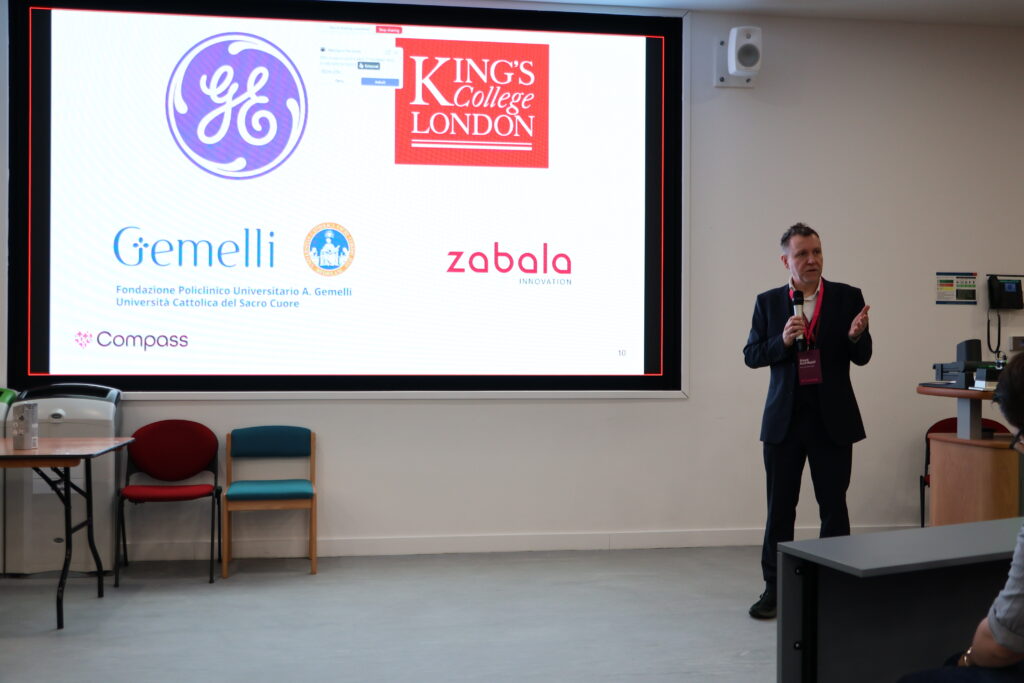
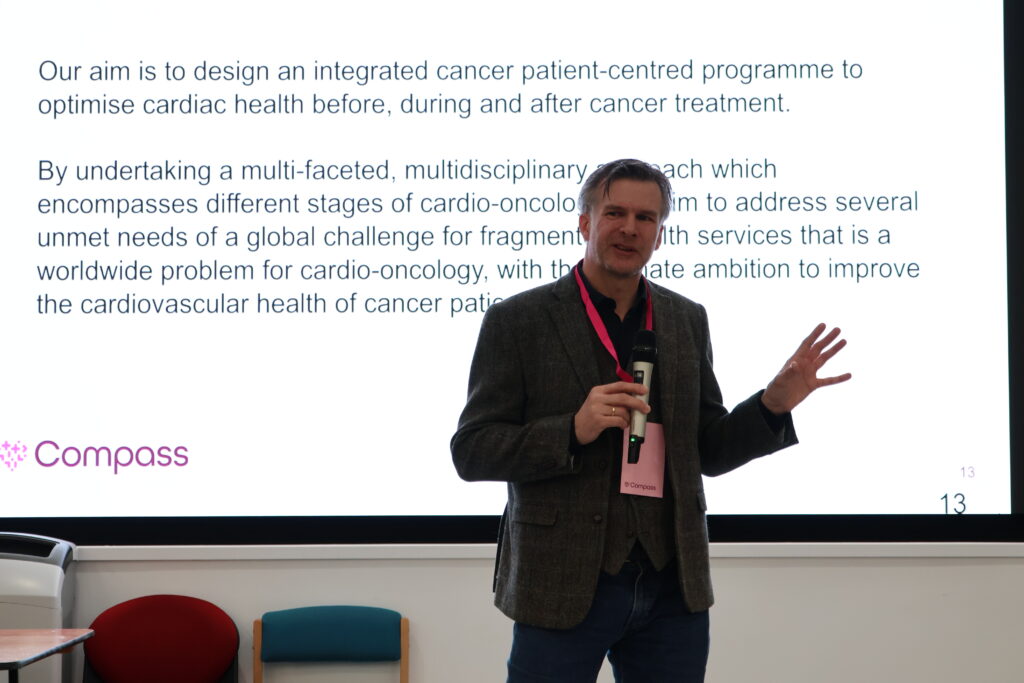
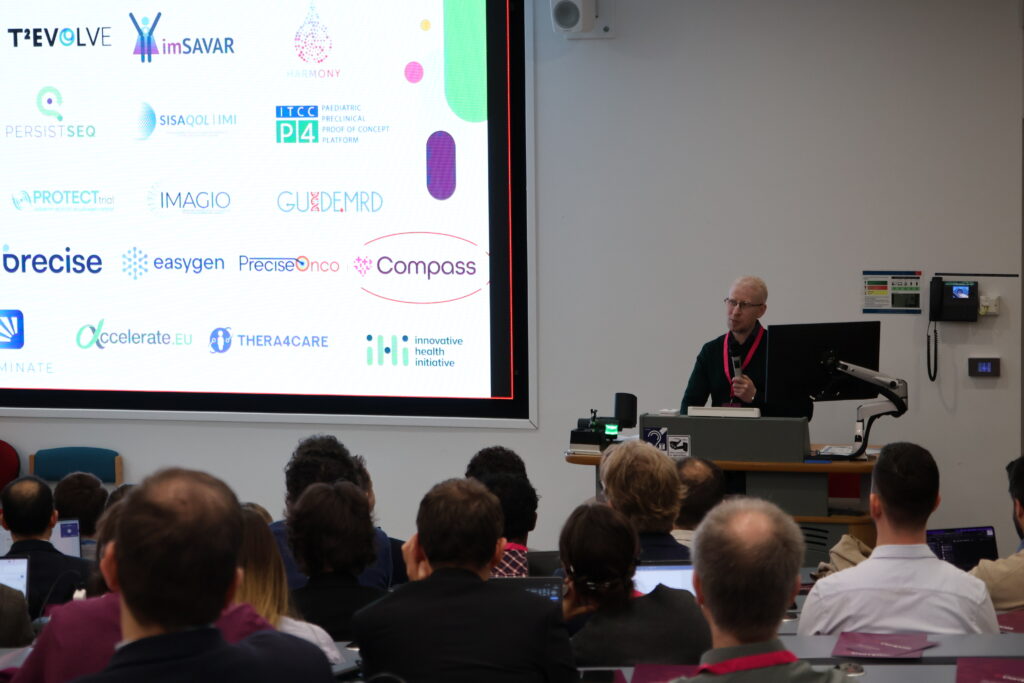
Attendees also had the opportunity to hear from Alexander Lyon, from Royal Brompton Hospital, and Sohaib Nazir, from King’s College London, who reflected on the expectations for the project, the importance of this collaboration, and the collective ambition to achieve meaningful impact in cardio-oncology.
Overall, the opening moments highlighted the shared ambition to design an integrated, patient-centred programme to optimise cardiac health before, during and after cancer treatment, ensuring safer and more effective care while addressing long-term cardiovascular risks.
The consortium also had the opportunity to hear from Oussama Karroum, Project Officer at the Innovative Health Initiative (IHI), who provided valuable insights into the programme’s vision, priorities, and expectations. His contribution helped frame COMPASS within the broader European research and innovation landscape, reinforcing the importance of collaboration, impact, and long-term sustainability.
The opening concluded with a round of partner introductions, providing an overview of the consortium’s breadth and expertise. This exchange helped strengthen connections across the partnership and reinforced the foundations for effective collaboration throughout the project.
Diving into the workplan
Following the opening session, the day continued with focused Work Package (WP) sessions, where partners explored in detail how the project will address cardiotoxicity across the entire patient pathway.
Discussions covered a broad range of topics, reflecting the multidisciplinary nature of the project. From scientific and technological developments to clinical applications and patient-centred approaches, partners examined how COMPASS will tackle key challenges in cardio-oncology across the full patient journey.
Together, these activities form the backbone of the project’s approach, combining cutting-edge science, digital innovation, and clinical expertise to enable earlier detection of cardiovascular risks and more personalised care strategies.


The sessions also provided a valuable space for collaboration, allowing partners to align methodologies, identify synergies, and clarify how their work will contribute to a shared vision.
From vision to action
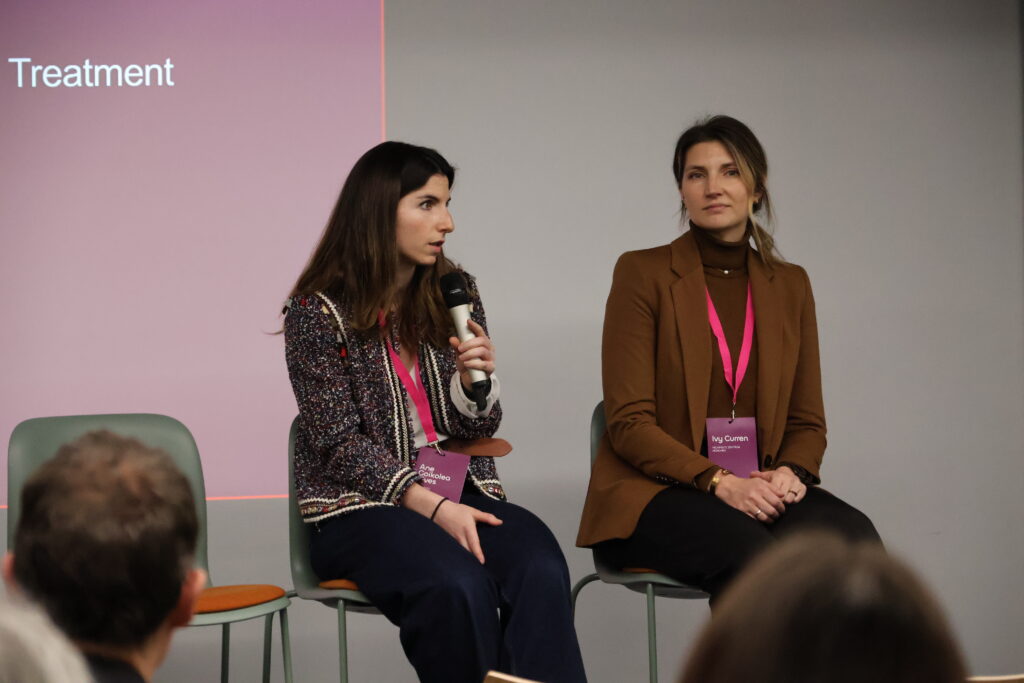
On the second day, the consortium came together for plenary presentations, where each WP leader presented an overview of planned activities, expected outcomes, and next steps.
These presentations highlighted how COMPASS will move from concept to implementation: developing solutions that are not only scientifically robust but also scalable and applicable in real-world healthcare settings.
At its core, the project aims to deliver a comprehensive, end-to-end clinical pathway that integrates risk prediction, early diagnosis, personalised treatment, and long-term monitoring. By leveraging multidisciplinary expertise, COMPASS seeks to overcome the fragmentation that currently limits effective cardio-oncology care.
Building connections to drive impact
Beyond the scientific agenda, the kick-off meeting was also a valuable opportunity for partners to connect, exchange ideas, and build the relationships that will underpin the project’s success.
The energy and engagement throughout the two days reflected a shared commitment to addressing one of the most pressing challenges in modern healthcare. Bringing together clinicians, researchers, industry leaders, and patient representatives, COMPASS embodies the collaborative spirit needed to deliver meaningful and lasting impact.